


When a procurement manager reviews a project specification for pipe penetrations through concrete walls or foundations, one question usually comes first: How does a Waterproofing sleeve work? The short answer is that it creates a flexible, compression-based barrier around a pipe or cable at the point where it passes through a structural opening. Unlike caulk, mortar, or mastic that can shrink and crack, a waterproofing sleeve uses an elastomeric body—typically EPDM, NBR, or silicone—to fill the annular gap between the pipe and the wall. When the sleeve is compressed, the rubber expands radially and presses tightly against both the pipe surface and the concrete opening, blocking water ingress even under hydrostatic pressure. For industrial buyers, this matters because penetration leaks are one of the most common causes of groundwater damage, corrosion, mold growth, and failed inspections. A well-chosen sleeve from Ningbo Kaxite Sealing Materials Co., Ltd. helps contractors, plant operators, and OEMs avoid costly rework and keep projects on schedule. In this guide, we will break down the working principle, key selection parameters, and installation checks so you can evaluate supplier proposals with confidence.
Contents
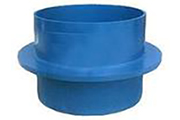
A waterproofing sleeve is a mechanical sealing device installed around a pipe, conduit, or cable where it passes through a concrete wall, foundation, floor, or tank structure. It consists of an elastomeric sealing element, a compression ring or flange, and bolts that apply controlled pressure to the rubber. When tightened, the sleeve closes the annular gap between the pipe and the structural opening.
In procurement terms, this is not a simple grommet. It is an engineered penetration seal that must handle site-specific conditions such as groundwater pressure, chemical exposure, pipe thermal expansion, and installation tolerances. A supplier that understands these variables can prevent the kind of call no buyer wants: a site report showing water tracking through a newly poured basement wall. Ningbo Kaxite Sealing Materials Co., Ltd. manufactures these sleeves with attention to compound selection, dimensional control, and repeatable compression behavior.
Picture a commercial building project where PVC drainage pipes pass through a basement retaining wall. The specification allows field-applied mortar or polyurethane caulk as the penetration seal. Within one year, the pipe expands and contracts with temperature changes, the mortar cracks, and groundwater follows the pipe surface into the building. The resulting damage goes beyond staining: electrical panels, stored goods, and fire-rated assemblies can be compromised.
The root cause is usually not the pipe or the concrete—it is the use of a rigid sealing method where a flexible, compression-based waterproofing sleeve is required. A proper sleeve absorbs pipe movement, vibration, and minor structural deflection while maintaining a continuous watertight contact area.
Solution: Replace rigid seals with an engineered waterproofing sleeve that provides radial compression, chemical resistance, and long-term recovery after movement. This simple change reduces callbacks, warranty claims, and project delays.
The working principle is straightforward but relies on precise contact pressure. A waterproofing sleeve is positioned in the annular space around the pipe. Bolts are tightened in a star pattern, drawing a pressure ring toward the structure. This action compresses the rubber body. Because rubber is nearly incompressible in volume, it deforms and expands radially. The inner lip presses against the pipe; the outer face presses against the concrete or sleeve housing. The result is a continuous, uniform seal that resists water ingress from either the wet side or the dry side.
In applications with hydrostatic pressure, the seal’s performance depends on contact stress exceeding the water pressure. This is why material hardness, compression set, and bolt torque are not cosmetic details—they are the difference between a dry penetration and a slow leak. Ningbo Kaxite Sealing Materials Co., Ltd. designs its sleeves with controlled rubber thickness and compression stops so workers can achieve repeatable sealing force without over-compressing the elastomer.
Q: How does a waterproofing sleeve work when water pressure is not just dampness but actual hydrostatic head?
A: The sleeve works by converting bolt torque into radial contact pressure. Once the contact pressure between the rubber and the pipe or concrete is greater than the external water pressure, water cannot migrate through the interface. For example, if a basement is subject to 0.5 bar of water pressure, the sleeve must maintain at least 0.5 bar of contact stress after allowing for compression set and temperature aging. High-quality EPDM compounds with low compression set are critical here. A properly specified sleeve also includes a pressure ring that distributes bolt force evenly, preventing low-pressure zones where water could track through.
When comparing supplier quotes, avoid buying on diameter and price alone. The right sleeve must match the actual service conditions. The table below summarizes the key parameters that should appear in a technical datasheet or inquiry form.
| Parameter | Typical Range / Specification | Procurement Check |
|---|---|---|
| Elastomer material | EPDM, NBR, silicone | Match fluid type, UV, temperature |
| Hardness | 40–70 Shore A | Balance sealing force and flexibility |
| Hydrostatic pressure rating | 0.5–5 bar | Confirm project water head |
| Temperature range | -40°C to +120°C | Check ambient and media temperature |
| Movement capability | ±5–15 mm | Verify pipe vibration and thermal expansion |
| Size range | DN25–DN1200 | Include non-standard diameters |
| Certification | ASTM, EN, ISO | Request test reports and batch records |
Ningbo Kaxite Sealing Materials Co., Ltd. supplies custom dimensions and compound formulations for potable water, wastewater, industrial chemical, and marine penetration applications. Request a full datasheet rather than a single-page quote to verify these parameters.
A common site failure occurs when installers tighten sleeve bolts with an impact wrench until the rubber extrudes. That over-compression may look tight but can tear the elastomer or reduce long-term recovery. Another common issue is installing the sleeve in an annular gap that is not clean, leaving debris that creates a leak path.
Solution: Use a torque-controlled installation procedure. Clean the pipe and opening, center the pipe, position the sleeve, and tighten bolts gradually in a star pattern. After initial tightening, re-torque after a short settling period. Inspect for uniform rubber compression and no visible gaps. Record torque values and photograph the completed penetration before backfilling. These steps protect the project and make warranty claims easier to manage.
Q: How does a waterproofing sleeve work when the pipe is subject to thermal expansion, water hammer, or pump vibration?
A: The elastomer does not rely on adhesion to the pipe. It works through sustained mechanical contact that can absorb small movements without losing the seal. As the pipe shifts, the rubber flexes and recovers as long as the movement stays within the sleeve’s rated range. This is why movement capability is an important specification. For dynamic systems, a sleeve with a softer compound and a wider sealing surface may be required. If movement exceeds the sleeve’s rating, the specification should include a flexible connector or expansion joint instead of relying on the sleeve alone.
For procurement teams, supplier qualification is as important as product design. Ningbo Kaxite Sealing Materials Co., Ltd. provides factory-direct waterproofing sleeves, custom rubber compounds, and full documentation including material certificates, inspection reports, and dimensional drawings. The company supports OEM and project-based orders with consistent lead times and technical pre-sales support.
Instead of guessing whether a sleeve will fit an existing core hole, buyers can send pipe diameter, wall thickness, water pressure, and media type. The engineering team will recommend the correct sleeve geometry and compound. This reduces sourcing risk and helps avoid site rework caused by mismatched penetration seals.
If you are evaluating waterproofing sleeve specifications or need a reliable source for pipe penetration seals, Ningbo Kaxite Sealing Materials Co., Ltd. is a specialized manufacturer of rubber sealing products and expansion joints. The company offers custom-sized waterproofing sleeves, technical data support, and quality-controlled production for international buyers. Contact the sales team at kaxite@seal-china.com or visit https://www.rubber-expansion-joint.com for product catalogs, material specifications, and quotation requests.
Zhang, Y., & Chen, L. (2022). Experimental study on radial compression seals for pipe penetrations in concrete structures. Journal of Waterproofing Engineering, 41(3), 215–229.
Müller, H., & Schmidt, R. (2021). Long-term compression set behavior of EPDM and NBR in watertight penetration seals. Polymer Testing, 98, 107123.
Park, J., & Kim, S. (2020). Hydrostatic pressure resistance of mechanical pipe penetration seals in basement walls. Construction and Building Materials, 253, 119176.
O’Connor, B., & Murphy, D. (2019). Waterproofing design for pipe penetrations in below-grade structures. Journal of Architectural Waterproofing, 12(4), 88–102.
Tanaka, M., & Sato, K. (2018). Sealing mechanisms of annular rubber sleeves under cyclic thermal movement. Rubber Chemistry and Technology, 91(2), 345–360.
Li, H., & Wang, Z. (2023). Comparative analysis of mortar, mastic, and mechanical sleeve seals for pipe penetration waterproofing. Journal of Civil Engineering Materials, 45(1), 54–68.
Fernández, P., & García, A. (2017). Water ingress paths at pipe penetrations: failure modes and remediation. Structural Survey, 35(3), 210–224.
Ahmed, R., & Hassan, M. (2022). Finite element modeling of contact stress in compressed elastomeric seals. International Journal of Pressure Vessels and Piping, 199, 104720.
Kowalski, T., & Nowak, J. (2020). Influence of surface roughness on watertightness of rubber-to-concrete contact in penetration seals. Archives of Civil Engineering, 66(2), 145–158.
Smith, J., & Brown, K. (2019). Quality control and field testing of waterproofing sleeves in wastewater structures. Water Practice and Technology, 14(4), 765–777.


