


Picture this: your maintenance team is replacing yet another cracked sleeve on a cable penetration because the supplier swore it would handle the heat. You start typing the same question into Google: What temperature range can a Flexible Waterproof Sleeve withstand? It feels like a simple query, but the answer changes with material, installation environment, and duty cycle. For procurement professionals, guessing wrong means downtime, water ingress, and rushed replacement orders. A flexible waterproof sleeve should remain watertight across daily temperature swings, not just in a lab test. In this guide, we break down realistic temperature limits, show where standard EPDM, silicone, and nitrile sleeves fail, and explain how Ningbo Kaxite Sealing Materials Co., Ltd. helps buyers secure the right compound for continuous operation. You will also find quick answers, material comparison tables, and ordering tips to avoid overspending on the wrong product.
Quick navigation:
No single number fits every application. A flexible waterproof sleeve made from EPDM typically operates from -40°C to 120°C continuously. Silicone versions extend from -60°C to 200°C but usually cost more. Nitrile (NBR) sleeves generally stay between -30°C and 100°C, which makes them better for oil exposure than for steam lines. FKM can handle -20°C to 200°C but adds significant cost. Short-term peaks may exceed these ranges by 10–20%, but repeated peaks shorten service life and reduce sealing force.
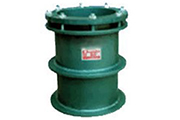
For procurement, the real question is not “what is the maximum” but “what compound matches the continuous service temperature of your site.” Ningbo Kaxite Sealing Materials Co., Ltd. recommends requesting a technical data sheet that states continuous, intermittent, and failure temperatures, not just a single marketing number. This simple step helps you compare suppliers on equal terms and avoid sleeves that pass a lab test but fail in your operating environment.
Flexible waterproof sleeves do more than block water. They must maintain a tight radial seal around cables, conduits, or pipes while absorbing thermal expansion, vibration, and occasional mechanical movement. When temperature is ignored, the seal becomes the weak point.
Pain point scenario: A wastewater treatment plant in a region with cold winters installs standard rubber sleeves outdoors. During a -15°C night, the rubber stiffens, loses elasticity, and a small gap opens around the cable. The next morning, moisture enters the control cabinet and trips a sensor. The procurement team faces an emergency replacement, expedited freight, and unplanned labor.
Solution: Selecting a sleeve with a documented low-temperature flexibility rating, such as -40°C for EPDM or -60°C for silicone, prevents this common failure. Ningbo Kaxite Sealing Materials Co., Ltd. tests low-temperature brittleness and compression set before shipment, so the sleeve remains compliant even after months of seasonal cycling.
Buyers often encounter the same failure patterns. Recognizing them early saves money and protects your project schedule.
Ningbo Kaxite Sealing Materials Co., Ltd. addresses these failures by helping buyers map the actual service conditions before sampling. Instead of offering a one-size-fits-all product, the company recommends one of several compounds—EPDM, silicone, nitrile, or FKM—based on continuous temperature, peak temperature, UV exposure, and chemical contact.
Ningbo Kaxite Sealing Materials Co., Ltd. works with procurement teams that cannot afford seal failures in high-temperature or cold-environment installations. The company supplies flexible waterproof sleeves in multiple elastomer compounds, with custom diameters, wall thicknesses, and embedded reinforcement layers for pressure or vacuum service.
For a food-processing plant needing hot-water washdown resistance, Kaxite recommends a silicone sleeve rated to 180°C continuous with a fabric-reinforced body. For an offshore wind project, the team selects a UV-stable EPDM compound that remains flexible at -35°C. In both cases, the buyer receives a material certificate and temperature test data instead of a generic datasheet.
This problem-solving approach helps buyers avoid overspending on FKM when EPDM is sufficient, or worse, under-specifying and facing warranty claims later.
The table below shows typical temperature ranges for common flexible waterproof sleeve materials. Always confirm the exact grade with your supplier because fillers, plasticizers, and curing systems can shift these values by 10°C or more.
| Material | Continuous Temperature Range | Short-Term Peak | Best For |
|---|---|---|---|
| EPDM | -40°C to 120°C | 130°C | Outdoor cable entries, water, ozone, UV |
| Silicone | -60°C to 200°C | 220°C | Hot washdown areas, high-temperature sensors |
| Nitrile (NBR) | -30°C to 100°C | 110°C | Oil contact, machine panels, fuel areas |
| FKM | -20°C to 200°C | 230°C | Chemical exposure, steam, aggressive media |
| TPE/TPV | -40°C to 110°C | 120°C | General-purpose indoor/outdoor seals |
When comparing suppliers, ask for three numbers: continuous temperature, short-term peak temperature, and the test method used. Ningbo Kaxite Sealing Materials Co., Ltd. reports values according to ISO or ASTM methods and can provide corresponding test certificates for bulk orders.
Q1: What temperature range can a flexible waterproof sleeve withstand for outdoor solar or wind projects?
A: For most outdoor renewable-energy installations, an EPDM sleeve rated from -40°C to 120°C is sufficient. If the sleeve sits near inverters or hot electrical enclosures, consider silicone with a range of -60°C to 200°C. Ningbo Kaxite Sealing Materials Co., Ltd. can supply both compounds and help you decide based on the enclosure’s internal heat rise.
Q2: What temperature range can a flexible waterproof sleeve withstand if it must survive short-term steam exposure above 150°C?
A: Standard EPDM and nitrile sleeves are not recommended for continuous or repeated steam exposure above 150°C. FKM or reinforced silicone sleeves are better choices. Short-term peaks of 170–180°C may be acceptable for silicone, but you should verify the exact grade and wall thickness. Kaxite offers FKM and high-temperature silicone sleeves with fabric reinforcement for steam-cleaned process areas.
Even the best sleeve fails if installed incorrectly. Use these practical tips to get the full temperature performance from your flexible waterproof sleeve.
To receive an accurate quote from Ningbo Kaxite Sealing Materials Co., Ltd., prepare the following information. This reduces back-and-forth and helps the engineering team recommend the most cost-effective compound.
| Required Parameter | Example | Why It Matters |
|---|---|---|
| Continuous operating temperature | -20°C to 90°C | Selects base elastomer |
| Short-term peak temperature | 110°C for 15 min/day | Confirms safety margin |
| Penetration diameter | Cable OD 18–22 mm | Ensures radial sealing force |
| Exposure media | Water, oil, salt fog | Prevents chemical incompatibility |
| Quantity and lead time | 2,000 pcs, 4 weeks | Drives pricing and production plan |
Ningbo Kaxite Sealing Materials Co., Ltd. accepts custom sizes and can provide pre-production samples for approval. For urgent replacement sleeves, ask about current stock programs and express shipping options.
If you are evaluating flexible waterproof sleeves for a demanding installation, the engineering team at Ningbo Kaxite Sealing Materials Co., Ltd. can help you match the right compound to your temperature profile. As a specialized sealing manufacturer, Ningbo Kaxite supplies custom-sized EPDM, silicone, nitrile, and FKM sleeves with documented thermal performance, compression-set data, and third-party testing options. Share your operating conditions or request a sample set to validate fit before bulk ordering. Contact us at kaxite@seal-china.com for a quotation, lead time, or technical data sheet.
Brown, R., 2019. Thermal Aging Effects on EPDM Sealing Profiles. Journal of Elastomers and Plastics, 51(3).
Zhang, L., et al., 2020. Mechanical and Thermal Performance of Silicone Rubber for Waterproof Cable Penetrations. Polymer Testing, 82.
Nakamura, K., 2018. Low-Temperature Flexibility of Nitrile Rubber Compounds in Sealing Applications. Rubber Chemistry and Technology, 91(2).
Hansen, M., 2021. Accelerated Heat Aging of Flexible Waterproof Gaskets: Lifetime Prediction. Polymer Degradation and Stability, 183.
Lee, S., 2017. Compression Set Behavior of EPDM and FKM in Industrial Sealing. Journal of Applied Polymer Science, 134(40).
Gupta, A., 2022. Water Ingress Protection in Cable Transits: Material Selection Criteria. IEEE Transactions on Dielectrics and Electrical Insulation, 29(4).
Ciesielski, A., 2019. Rubber Expansion Joints and Flexible Sleeves: Thermal-Mechanical Coupling. International Journal of Pressure Vessels and Piping, 174.
O'Connor, T., 2020. Silicone Rubber Seals for Outdoor Enclosures: UV and Temperature Stability. Materials and Design, 195.
Park, J., 2016. Effect of Carbon Black Loading on Thermal Conductivity of Rubber Sealing Sleeves. Composites Part B: Engineering, 98.
Fernandez, P., 2023. Comparative Study of TPE and EPDM for Waterproof Junction Seals under Cyclic Thermal Loads. Journal of Materials Science, 58(15).


