


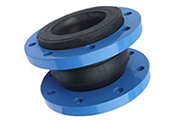
When a procurement team is sourcing expansion joints for a plant that runs both utility water and chemical transfer lines, the first question is often: Can a Single Ball Rubber Joint be used for both water and chemical piping? The short answer is yes—but only when the joint is specified as a system, not as a catalogue number. A single ball rubber joint is a flexible connector with one elastomeric arch, usually reinforced with fabric or steel wire and finished with flanges. It absorbs vibration, compensates misalignment, and reduces noise. Those benefits are identical in water and chemical service. The difference lies in what the rubber sees. Water service may involve chlorine, temperature spikes, pressure surges, and occasional backwash. Chemical service may involve acids, alkalis, solvents, or mixed streams that attack the wrong elastomer in weeks. A buyer who treats the joint as a commodity can create a leak path; a buyer who matches elastomer, liner, reinforcement, flange finish, pressure rating, and test documentation can standardize on one body style and reduce spares. In a real procurement scenario, a maintenance engineer may ask for one SKU to cover cooling water, caustic dosing, and mild acid transfer. The answer depends on concentration, temperature, and continuous versus intermittent exposure. This guide explains how to evaluate that request, what to put in the data sheet, and where Ningbo Kaxite Sealing Materials Co., Ltd. can support material selection and batch testing.
Pain scenario: A buyer wants one spare-part family for cooling water, caustic dosing, and mild acid transfer. Maintenance likes the simplicity, but a leak in chemical service can turn a low-cost item into a shutdown event. The real risk is not the single ball shape; it is an elastomer, liner, or flange finish that was approved for water but never checked against the chemical stream.
Solution: Treat the single ball rubber joint as a configurable product. The body style can stay the same, while the wetted materials, reinforcement, pressure rating, and documentation are selected for the most aggressive service in the plant. Ningbo Kaxite Sealing Materials Co., Ltd. supports this approach with compound selection, PTFE lining options, flange customization, and batch testing so one purchasing category can still carry the right technical limits.
| Decision factor | Why it matters | Procurement action |
|---|---|---|
| Fluid family | Water, acid, alkali, solvent, and mixed streams stress rubber differently. | List every media and concentration, not only the main process line. |
| Elastomer and liner | EPDM, NBR, neoprene, FKM, and PTFE-lined designs have different chemical limits. | Require a written compound or liner recommendation. |
| Temperature and pressure | Heat accelerates chemical attack; pressure surges reduce safety margin. | State continuous and peak values separately. |
| Flange standard | Mismatched drilling creates installation stress and leak paths. | Confirm standard, size, pressure class, and face type. |
| Test documentation | Water service may hide a defect that chemical service will expose. | Ask for pressure test reports and material traceability. |
Pain scenario: Water is often treated as harmless, so the lowest-cost rubber joint is accepted. Then chlorine, hot-water cycling, backwash surges, or oily wastewater causes hardening, swelling, or cracking. The buyer sees a failed joint but the root cause is an underspecified compound.
Solution: For water service, confirm the actual water chemistry and operating cycle. EPDM is a common choice for many cold and hot water, cooling, and chlorine-bearing duties, while NBR may be considered where oil contamination is expected. The final choice must still match temperature, pressure, and cleaning chemicals. Ningbo Kaxite Sealing Materials Co., Ltd. can review water-service data and recommend a single ball rubber joint specification that balances flexibility, pressure rating, and service life.
| Water condition | Risk to the joint | Recommended review |
|---|---|---|
| Potable or cooling water with chlorine | Elastomer aging and surface cracking | Confirm chlorine level, temperature, and EPDM suitability. |
| Hot water or heating loop | Accelerated aging and pressure fluctuation | Check continuous temperature and pressure rating. |
| Oily wastewater | Swelling of some water-grade rubbers | Evaluate NBR or a suitable compound. |
| Seawater or brackish water | Corrosion of flange hardware and rubber aging | Specify flange finish and elastomer clearly. |
| Backwash or surge lines | Movement beyond design limits | Review anchor points, control rods, and pressure surges. |
Pain scenario: A chemical line is added to a project after the water joints are ordered. The buyer assumes the same single ball rubber joint will work because the pipe size and pressure class match. In service, the chemical attacks the wrong elastomer, the arch softens, and the flange area begins to weep.
Solution: Chemical service requires a compatibility review by media, concentration, temperature, and exposure time. A PTFE-lined single ball rubber joint can be a practical path for aggressive media, while FKM, EPDM, or NBR may fit other duties. Ningbo Kaxite Sealing Materials Co., Ltd. helps buyers compare the wetted path, lining option, and test plan before a purchase order is released.
| Chemical family | Watch-out | Material path to review |
|---|---|---|
| Dilute acids | Concentration and temperature change attack rate | EPDM or PTFE-lined option depending on duty. |
| Caustic and alkaline solutions | Some elastomers soften or swell | Confirm compound and temperature limit. |
| Solvents | Many standard rubbers swell severely | PTFE-lined or special compound review. |
| Oxidizing chemicals | Rapid degradation of vulnerable elastomers | Verify compatibility and consider lining. |
| Oils and fuels | Water-grade EPDM may not be suitable | Review NBR or FKM where appropriate. |
| Mixed streams | Compatibility data for one chemical may not cover the mixture | Provide full mixture data and cleaning chemicals. |
Pain scenario: Purchasing compares quotations by price and delivery, but the quotations use different rubber compounds. The lowest offer may be suitable for water and unsuitable for chemical piping, so the comparison is not like for like.
Solution: Put the material map into the RFQ. Ask each supplier to state the elastomer, liner, reinforcement, flange finish, pressure rating, temperature range, and test standard. Ningbo Kaxite Sealing Materials Co., Ltd. can provide a clear material proposal so buyers can compare single ball rubber joint offers on technical equivalence, not only on unit cost.
| Material option | Water duty | Chemical duty | Limits to confirm |
|---|---|---|---|
| EPDM | Common for many water and cooling duties | Often considered for dilute acids and alkalis | Not a general solution for oils and solvents. |
| NBR | Useful where oil contamination is present | Good for many oil and fuel duties | Check resistance to acids, ozone, and weather. |
| Neoprene | Suitable for some water and outdoor duties | Moderate chemical resistance | Confirm temperature and specific media. |
| FKM | Selected for higher temperature and chemical duty | Useful for many aggressive chemicals | Not universal for all solvents, amines, or ketones. |
| PTFE-lined | Used where wetted-path protection is needed | Practical for many aggressive chemical streams | Confirm lining integrity, vacuum, and pressure limits. |
Pain scenario: An RFQ lists size, quantity, and pressure only. Suppliers quote different rubber grades, flange finishes, and test levels. The buyer receives comparable-looking offers that are not technically equal.
Solution: Use a data sheet that forces the important variables into the open. Include media, concentration, temperature, pressure, vacuum, movement, flange standard, test requirement, marking, and documentation. Ningbo Kaxite Sealing Materials Co., Ltd. can review the RFQ and flag missing details before quotation, reducing the chance of a water-approved joint being sent into chemical service.
| RFQ field | Example entry | Why it matters |
|---|---|---|
| Media and concentration | Cooling water with chlorine; 10% caustic; dilute acid | Defines the chemical compatibility review. |
| Temperature | Continuous 5–60°C; peak 80°C | Peak temperature can change material choice. |
| Pressure and vacuum | 10 bar design; vacuum support required | Prevents arch collapse or insufficient safety margin. |
| Flange standard | EN 1092-2 PN16; ANSI 150 | Ensures bolting and face alignment. |
| Elastomer or liner | EPDM; NBR; PTFE-lined | Prevents price-only comparison of different products. |
| Testing and documents | Hydrostatic test; material certificate; marking | Creates an auditable purchase record. |
Pain scenario: A correctly specified joint fails because it is twisted during installation, over-compressed, painted over, or installed without vacuum support. The purchaser then questions the material even when the installation caused the problem.
Solution: Follow the installation drawing, keep the joint free of torsion, align flanges before tightening, and use control rods where movement must be limited. For chemical service, confirm the test media and cleaning procedure. Ningbo Kaxite Sealing Materials Co., Ltd. can supply drawings, marking, and test records that help the site team protect the specification.
| Checkpoint | Target condition | Evidence |
|---|---|---|
| Flange alignment | Faces parallel and bolt holes aligned without force | Installation check sheet |
| Torsion | No twist in the rubber arch | Visual inspection before bolting |
| Movement | Within axial, lateral, and angular limits | Approved drawing and site measurement |
| Vacuum duty | Vacuum support or suitable design confirmed | Product data sheet |
| Pressure test | Test media and pressure approved for the line | Test report and site log |
Answer: It can be used for both duties only when the selected elastomer or liner is approved for the worst-case chemical exposure and the water-service conditions. The body style may be shared, but the material specification must still be confirmed. A solvent line, for example, may require a PTFE-lined or special compound rather than a standard water-grade rubber joint. Ningbo Kaxite Sealing Materials Co., Ltd. can review the media list and advise whether one specification is realistic.
| Decision point | Approve one spare? | Reason |
|---|---|---|
| Mild chemical plus cooling water | Possible | If one compound is documented for both and temperature is within limits. |
| Solvent or concentrated acid | Usually no | Standard water-grade elastomer may swell or degrade. |
| Intermittent chemical cleaning | Review carefully | Cleaning chemicals can be more aggressive than the process media. |
Answer: Verify concentration, temperature, continuous versus intermittent exposure, cleaning chemicals, pressure, vacuum, and the wetted path. Ask for a written compatibility recommendation and a test plan. Do not rely on the flange size or pressure class alone. Ningbo Kaxite Sealing Materials Co., Ltd. helps buyers close these gaps with material selection, lining options, and batch documentation.
| Verification item | Required answer | Why it matters |
|---|---|---|
| Chemical concentration | Minimum and maximum values | Dilute and concentrated media can behave differently. |
| Temperature | Continuous and peak values | Heat can accelerate swelling and aging. |
| Exposure pattern | Continuous, batch, or cleaning only | Intermittent exposure still requires compatibility review. |
| Wetted materials | Elastomer, liner, reinforcement, flange finish | Every wetted surface must suit the fluid. |
| Test and traceability | Pressure test, batch marking, material certificate | Supports audit and maintenance planning. |
Ningbo Kaxite Sealing Materials Co., Ltd. supplies single ball rubber joints, rubber expansion joints, and sealing components for water, chemical, HVAC, marine, and industrial piping projects. Based in Ningbo, the company supports procurement teams with elastomer selection, PTFE lining options, flange customization, pressure and vacuum testing, batch traceability, and export documentation. Its website, https://www.rubber-expansion-joint.com, provides product data and application guidance, and the team can be reached at kaxite@seal-china.com for drawings, RFQ review, and compatibility questions. If your project needs one joint family to cover both water and chemical piping, send the media, concentration, temperature, pressure, and flange standard; the company will help confirm whether a single ball rubber joint is suitable or whether a lined or special compound is the safer choice.
Lake, G. J., & Thomas, A. G. (1967). The strength of highly elastic materials. Proceedings of the Royal Society of London. Series A, Mathematical and Physical Sciences, 300(1460), 108–119.
Gent, A. N. (1996). A new constitutive relation for rubber. Rubber Chemistry and Technology, 69(1), 59–61.
Mars, W. V., & Fatemi, A. (2002). A literature survey on fatigue analysis approaches for rubber. International Journal of Fatigue, 24(9), 949–961.
Rivlin, R. S., & Saunders, D. W. (1951). Large elastic deformations of isotropic materials. VII. Experiments on the deformation of rubber. Philosophical Transactions of the Royal Society of London. Series A, Mathematical and Physical Sciences, 243(865), 251–288.
Bergström, J. S., & Boyce, M. C. (1998). Constitutive modeling of the large strain time-dependent behavior of elastomers. Journal of the Mechanics and Physics of Solids, 46(5), 931–954.
Harogoppad, S. B., & Aminabhavi, T. M. (1991). Diffusion and sorption of organic liquids through polymer membranes. Journal of Applied Polymer Science, 42(8), 2329–2338.
Aminabhavi, T. M., & Phayde, H. T. S. (1995). Sorption and diffusion of aliphatic and aromatic hydrocarbons through elastomeric membranes. Journal of Applied Polymer Science, 55(9), 1335–1345.
Braden, M., & Gent, A. N. (1960). The mechanism of ozone cracking in rubber. Journal of Applied Polymer Science, 3(7), 90–99.
Barrer, R. M. (1941). Permeability of rubber to gases and vapours. Transactions of the Faraday Society, 37, 91–105.
Gent, A. N., & Lindley, P. B. (1959). Internal rupture of bonded rubber cylinders in tension. Proceedings of the Royal Society of London. Series A, Mathematical and Physical Sciences, 249(1257), 195–205.


